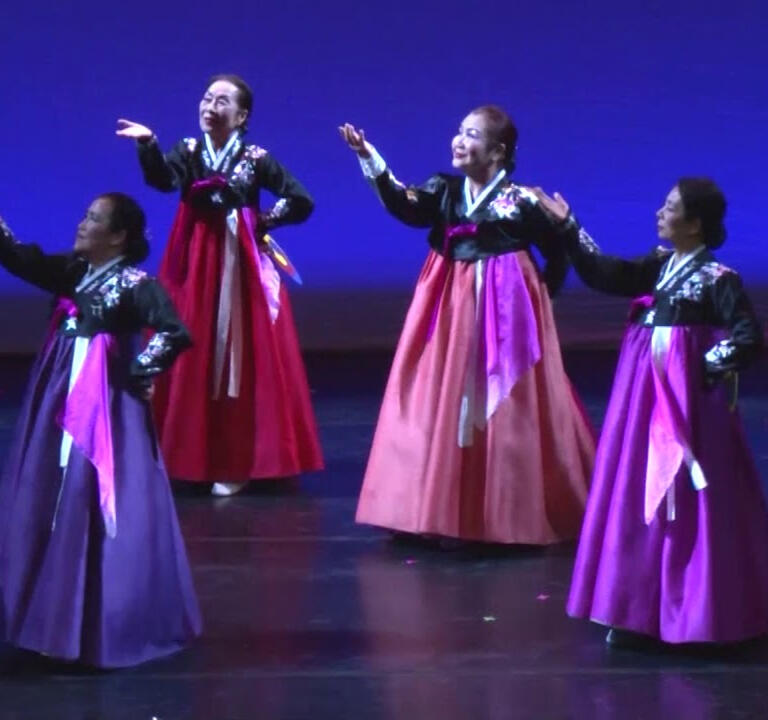
Exploring Arirang
Abstract
This website explores the traditional Korean folk song "Arirang" as a powerful symbol of Korean national identity, resilience, and cultural expression. "Arirang" has evolved over centuries to reflect Korea's historical struggles, hopes, and collective spirit. This website will examine the song’s role as a ritual, analyzing how it’s performed across various regions, each adding unique variations that capture distinct local interpretations. Through an exploration of "Arirang’s" lyrical themes, performance styles, and cultural significance, the website aims to deepen understanding of how this song serves not only as a musical expression but as a unifying symbol that adapts with each generation, preserving Korea’s heritage while continually evolving.
What is "Arirang"?
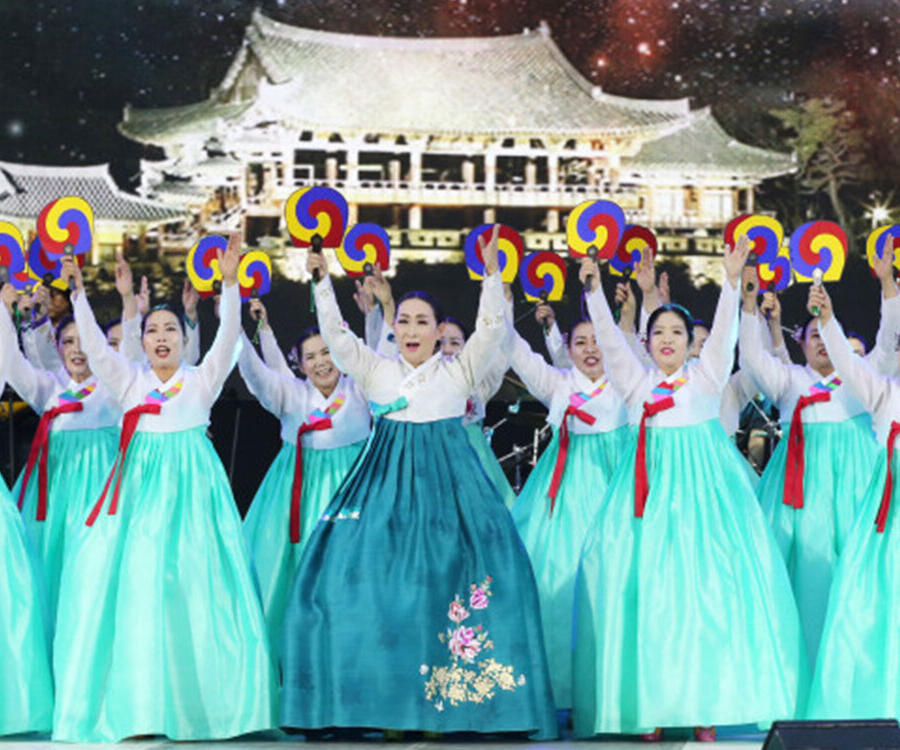
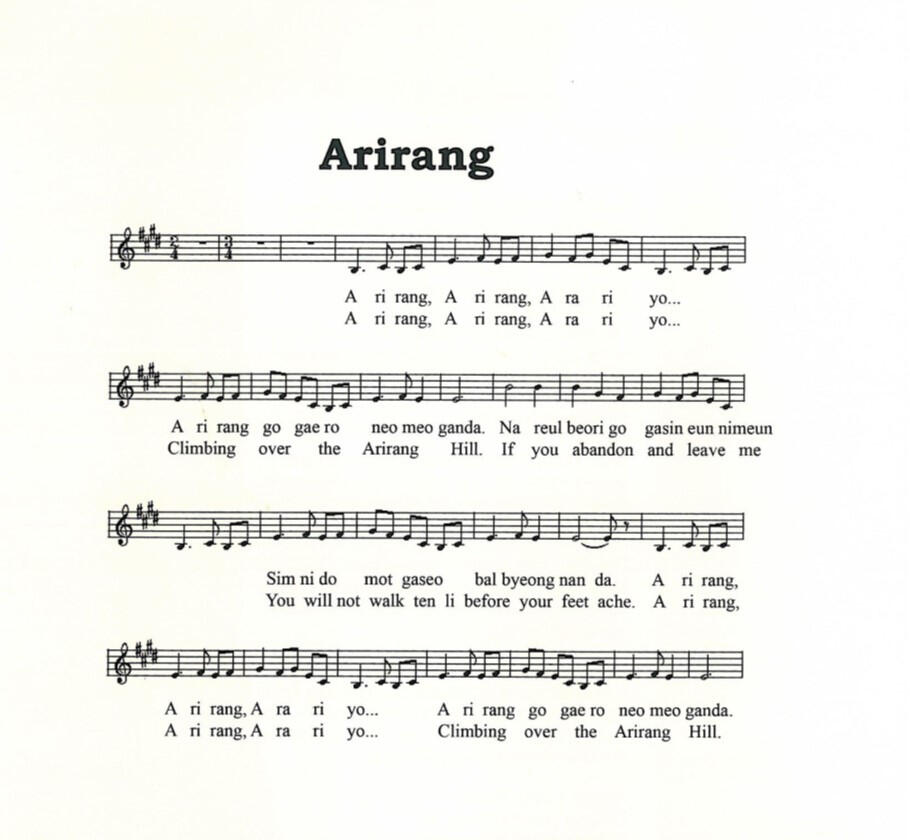
"Arirang" is a traditional Korean folk song that holds deep cultural significance and is often considered the unofficial national anthem of Korea (Kang, 2019). As stated by Sims & Stephens (2011), "rituals are performances that are repeated and patterned and frequently include ceremonial symbols and actions." This song's lyrics express themes of longing, separation, and resilience, capturing the emotional landscape of the Korean people in a repetitive manner, aligning with the ritualistic nature of patterned performances. Folk groups use "Arirang" to convey their values and beliefs, such as the importance of endurance in the face of hardship, the strength of the Korean spirit, and the connection to one's homeland. Through various regional renditions and performances, "Arirang" becomes a vehicle for expressing collective identity and cultural pride. It serves as a symbol of Korea's history and struggles, resonating with listeners by evoking shared experiences of loss, love, and unity, thus solidifying its place in the cultural consciousness.
Who performs "Arirang"?
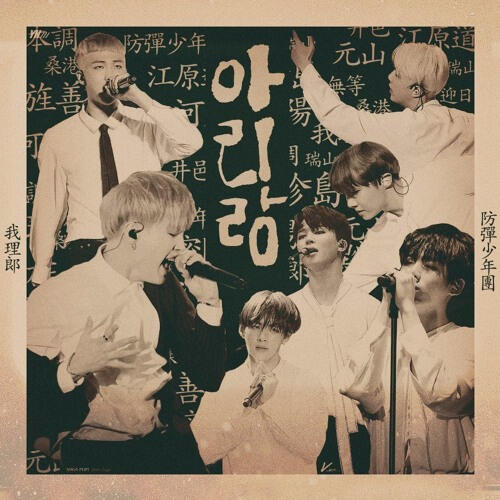
"Arirang" has been performed by various artists and groups throughout history. There isn't a single specific "folk group" that is universally associated with performing "Arirang," but it has been performed by countless traditional Korean musicians and contemporary artists alike. It's taught throughout schools for the new generations to learn, sung in hopes to "manifest a longing for the reunification of the Korean people among the nation" (Kang, 2019).The photo to the right is the group BTS, currently one of the most famous boy groups in the world, who released and performed their own cover of "Arirang" in a modernized fashion back in 2018. BTS, as international icons, exist in a liminal space between preserving Korean culture and embracing a globalized music industry, embodying the transitional phase highlighted by Arnold van Gennep's (1960) rites of passage. Their modernized rendition of "Arirang" reflects this duality—honoring a centuries-old folk song while infusing it with contemporary sounds and styles, symbolizing a cultural evolution.
How "Arirang" is performed
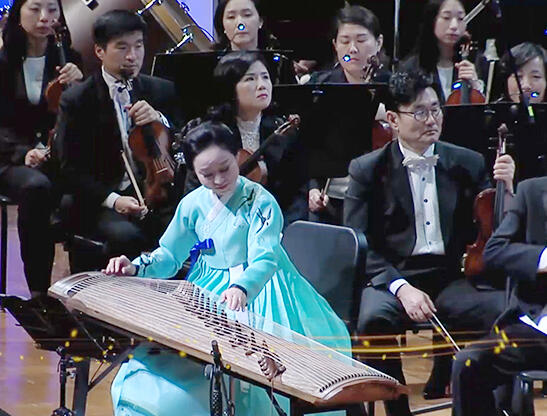
In many Korean cultural and ceremonial situations, "Arirang" is frequently done as a ritual, signifying emotional release, resiliency, and togetherness. It has historically been sung at festivals, memorial services, important community gatherings, and even the 2002 Korean soccer world cup (Zheng, 2007). Because of the song's emotional and repeated qualities, it can be sung or listened to collectively, fostering a sense of cohesion and ties to the past.Traditional instruments like the janggu (a drum) or gayageum (a stringed instrument) may be used to accompany "Arirang" during its ritual performance, highlighting its strong ties to Korean cultural customs (Kang, 2019). Different regional identities are highlighted by the song's regional variations, which demonstrate how the song has changed over time while retaining its ceremonial significance (Lee, 2012).
Resources
Lee, K. "Exhibiting Arirang." International Journal of Intangible Heritage 7 (2012): 123-128.Sims, Martha, and Stephens, Martine. Living Folklore, 2nd Edition : An Introduction to the Study of People and Their Traditions. Logan: Utah State University Press, 2011.Zheng, Su. "From Molihua to Arirang: The Role of Folksong in Modern China and South Korea." 동양음악 (Journal of the Asian Music Research Institute) 29 (2007): 121-143.Kang, Imgyu. "Missa arirang: a fusion of korean and western music." Journal of the Scholarship of Teaching and Learning for Christians in Higher Education 9, no. 1 (2019): 6.Van Gennep, Arnold. 1960. The Rites of Passage.
Click the star to learn more on our Folklore and Expressive Culture Website!